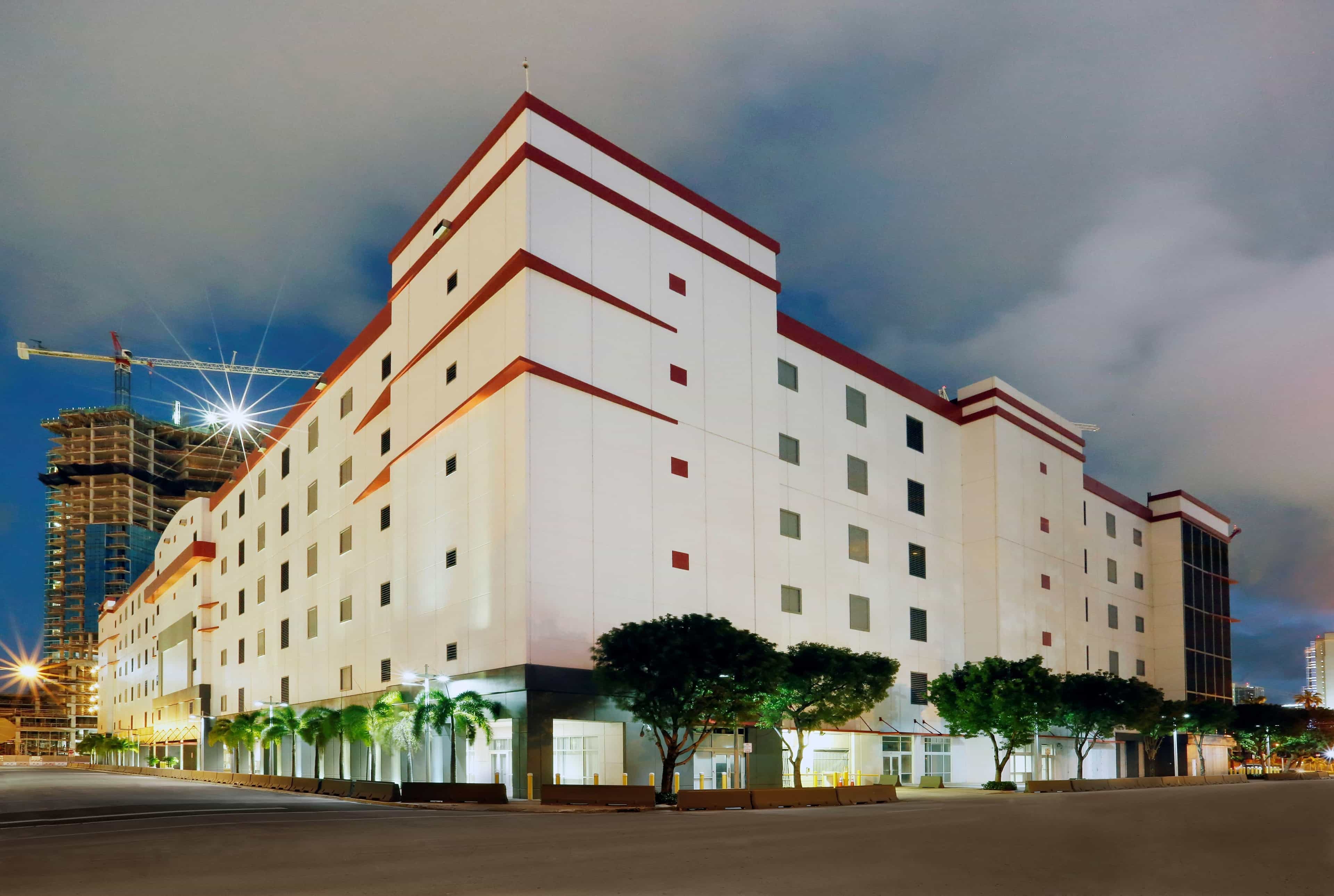
Gateway to the Americas
Compare Miami Data Centers
Strategic location connecting North and South America. Compare leading facilities from Netrouting, Equinix, QTS, CoreSite, and Digital Realty — on tier level, power, cooling, hurricane resilience and carrier connectivity.
Miami's leading colocation facilities
12 carrier-neutral data centers across Miami, compared on the specifications that decide a deployment.
| Facility | Location | Tier | Power | Size | Hurricane rating |
|---|---|---|---|---|---|
| Equinix MI6 | 1525 NW 98th Court, Doral | Tier 3 | — | 75,046 sq ft | — |
| CoreSite MI2 | 2100 NW 84th Avenue, Doral | Tier 3 | Available | 103,000 sq ft | Category 5 |
| EdgeConneX MIA02 | 475 NE 185th Street, Miami Gardens | Tier 3 | 6.0 MW | 65,518 sq ft | — |
| QTS Miami | 11234 NW 20th Street, Miami | Tier 3 | Available | 30,000 sq ft | Category 5 |
| CoreSite MI1 | 2115 NW 22nd Street, Miami | Tier 3 | — | 45,000 sq ft | Category 5 |
| EdgeConneX MIA01 | 2132 NW 114th Avenue, Miami | Tier 3 | 1.5 MW | 27,000 sq ft | — |
| Iron Mountain MIA-1 | 2925 NW 120th Terrace, Miami | Tier 3 | 16.0 MW | 150,000 sq ft | — |
| Netrouting Miami | 36 NE 2nd Street, Miami | Tier 3 | 5.0 MW | 15,000 sq ft | Category 4 |
| Equinix MI2 | 36 NE 2nd Street, Miami | Tier 3 | 10.0 MW | 24,000 sq ft | Category 4 |
| Digital Realty MIA10 | 36 NE 2nd Street, Miami | Tier 3 | 10.0 MW | 150,000 sq ft | Category 4 |
| DataBank MIA1 | 36 NE 2nd Street, Suite 700, Miami | Tier 3 | 1.6 MW | 11,030 sq ft | Category 4 |
| Equinix MI1 | 50 NE 9th Street, Miami | Tier 4 | 17.0 MW | 750,000 sq ft | Category 5 |
New & Upcoming Miami Data Centers
Miami is in the middle of an AI-driven buildout. Iron Mountain MIA-1 — a 150,000 sq ft, 16 MW GPU-ready facility in Westview — opens mid-2026 with 100% renewable-matched energy, and further AI-focused projects are under development across Miami-Dade. See what's being built in Miami in the FAQ.
Why Choose Miami Data Centers?
Strategic location, hurricane-resistant infrastructure, and direct connectivity to Latin America
Gateway to Americas
Direct submarine cable access to South America and Caribbean markets with ultra-low latency
Hurricane Resistant
Hurricane-hardened facilities rated up to Category 5, with wind ratings up to 185 MPH and flood protection
Tier 3 & 4 Facilities
Industry-leading uptime guarantees with N+1 and 2N redundancy across power and cooling
Compare Miami's Leading Data Centers
Get detailed comparisons of facilities, specifications, and capabilities
Security Features
- 24/7 On-site Security
- Biometric Access Control
- Man-trap Entry Systems
- CCTV Monitoring
Power & Cooling
- N+1 / 2N Redundancy
- Diesel Generators
- UPS Systems
- Precision Cooling
Connectivity
- Carrier Neutral
- Submarine Cable Access
- CDN Access (FLIX)
- Internet Exchange Points
Compliance
- SOC 1 & 2 Type 2
- PCI DSS
- HIPAA Compliant
- SSAE 16
Common questions
Are there data centers in Miami?
Yes. Miami has one of the densest concentrations of carrier-neutral colocation in the southeastern United States, anchored by the NAP of the Americas at 50 NE 9th Street — the primary interconnection point between the United States and Latin America. Major operators with Miami facilities include Equinix, CoreSite, Digital Realty, QTS, DataBank, EdgeConneX, Iron Mountain and Netrouting, with facilities ranging from boutique carrier-hotel suites to the 750,000 sq ft NAP of the Americas.
Where is the largest data center in Florida?
The largest colocation facility in Florida is Equinix MI1 in downtown Miami, at 50 NE 9th Street. The building spans roughly 750,000 square feet with about 17 MW of power capacity, and houses the NAP of the Americas along with more than 160 carriers and service providers.
What should I look for in a Miami data center specifically?
Three factors matter more in Miami than in most markets. Hurricane resilience comes first: look for Category 5 rated construction, elevation above the flood plain and at least 72 hours of on-site generator fuel. Second is Latin America connectivity — proximity to the NAP of the Americas and access to subsea cable systems such as Monet and GlobeNet determine your latency south. Third is cooling efficiency, because Miami's heat and humidity place a heavier and more constant load on cooling plant than in cooler climates.